By Team Azuni. With thanks to Mark Weeks, founder of Azuni World and author of Indoctrinated, whose work on self talk and the nervous system shaped much of the thinking here.
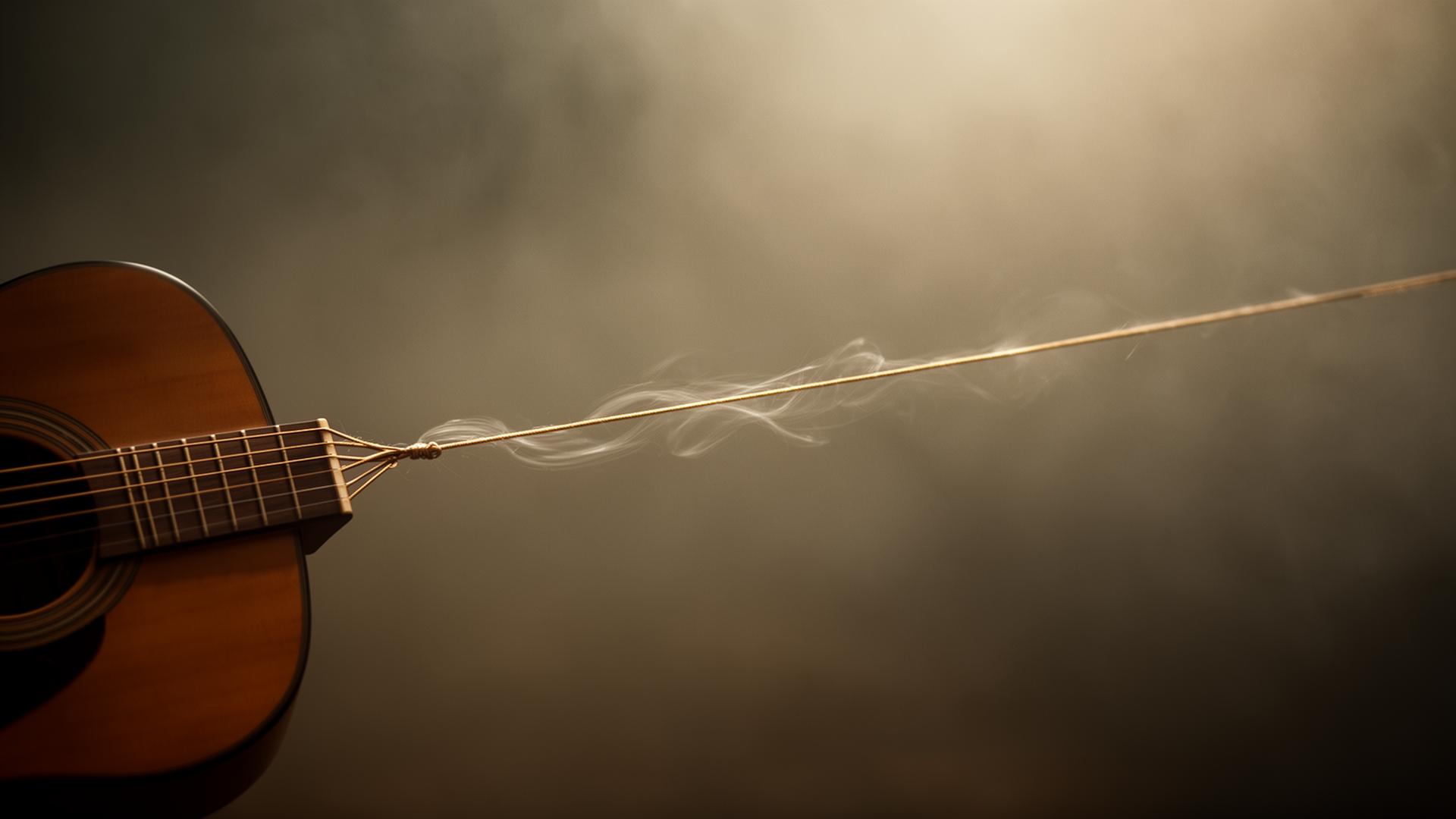
A guitar string only sings when it sits between two tensions. Too loose, and it slaps the fretboard with a dead thud. Too tight, and the note bends sharp, the wood groans, and sooner or later the string snaps. Somewhere in the middle there is a note that fills the room.
Your body is the same instrument. Mind, body, and spirit are three strings on the same guitar. Wind any one of them too far in either direction and the whole song goes off.
This is what ancient Chinese philosophy called yin and yang. What modern physiology calls homeostasis. The body is always, quietly, trying to bring you back to the middle. Most of our suffering is what happens when we override that pull.
The body has a setpoint. You do not get to vote on it.
Homeostasis is the body's relentless project of keeping you alive and steady. Temperature. Blood sugar. Heart rate. Hormone levels. The nervous system is the conductor, running thousands of micro adjustments a second so you can read this sentence without thinking about your kidneys.
The same machinery runs your mood and your drive. Three chemicals do most of the visible work:
Adrenaline is the sprint. It floods you when you need to act, push, perform, or run. It is brilliant in short bursts and corrosive over long ones. The body did not design it to be on tap for forty hours a week.
Dopamine is the chase. It is the chemical of anticipation, novelty, and reward. Every notification, every scroll, every "one more episode" is a small dopamine hit. The problem is not dopamine. The problem is that the system recalibrates. The more hits you take, the more you need just to feel normal. Baseline drops. Ordinary life starts to feel grey.
Serotonin is the settle. It is the chemical of contentment, status, sleep, gut health, and quiet wellbeing. It does not spike the way dopamine does. It accumulates through sunlight, movement, food, sleep, and meaningful connection. It is the slow note, not the loud one.
When these three are in rough proportion, you feel like yourself. When one dominates for too long, you do not.
The overwound string
Wind a string too tight for too long and two things happen. First, the note goes sharp, brittle, wrong. Second, the string itself begins to fatigue. Microscopic stress, invisible, accumulating, until one day a normal strum snaps it.
That is chronic adrenaline. That is dopamine spiked into the red for months. That is a nervous system that never gets the signal you are safe now, stand down.
You can feel it before you can name it. Sleep gets shallow. Small things irritate you out of proportion. Food tastes flatter. You lose the ability to enjoy what you used to enjoy. The string is still playing, but it is playing sharp, and something is going to give.
Something will always give. The body is not negotiating with you. It is keeping score.
But the slack string is no better
Here is the part most wellness culture quietly ignores. Too much rest is just as destructive as too much push.
A string with no tension does not make a richer sound. It makes no sound at all. A body that never gets stressed loses muscle, loses bone density, loses cardiovascular range, loses cognitive sharpness. A mind that never gets challenged dulls. A spirit that never reaches for anything shrinks.
This is the part of yin and yang most people miss. It is not "rest good, work bad." It is that each one is meaningless without the other. Light defines shadow. Push defines recovery. The contraction makes the expansion possible.
You need to work at the breaking point occasionally. That is where adaptation happens. That is where the nervous system learns it can handle more than it thought. But you cannot live there. And if you avoid it entirely, you also wither, just more slowly, and with better lighting.
What balance actually looks like
Balance is not a steady hum at fifty percent. It is a rhythm. Tension and release. Push and recover. Sprint and walk. Effort and surrender. The body is built for the swing, not the middle.
A few honest signals to watch.
If you cannot sit still for ten minutes without reaching for your phone, your dopamine baseline has drifted. The fix is not more stimulation. It is a few days of deliberate boredom until the dial resets.
If you wake up tired after eight hours of sleep, your nervous system is still running. That is adrenaline finishing the night shift you handed it. Long exhales, slow walks, and protected mornings do more here than any supplement.
If everything feels flat and nothing feels urgent, you may not need more rest. You may need a real challenge. Serotonin builds through movement, sunlight, and being useful to someone. Sitting on the sofa for another weekend will not produce it.
If you have not been uncomfortable in a long time, the string is going slack. Find something hard. Train for it. The discomfort is the medicine.
If you have been uncomfortable for months on end, the string is overwound. Stop adding tension. The body cannot hear you over its own alarm.
The quiet voice in all of this
This is where Mark's work lands. The nervous system listens to your self talk more than it listens to your calendar. Tell yourself for long enough that you are behind, under threat, not enough, and the body will produce the chemistry to match. It does not know the threat is imaginary. It only knows you keep ringing the bell.
The reverse is also true. Speak to yourself the way a good coach would, and the body starts to believe it is safe enough to recover, and capable enough to stretch. Balance is partly a physiological project and partly a linguistic one. The string is tuned in the inner voice, long before it is tuned in the day.
Homeostasis is always pulling you home. Your job is to stop fighting the pull, and to learn the rhythm. Push when it is time to push. Rest when it is time to rest. Notice when the note goes sharp. Notice when it goes dead. Retune.
The song is in the middle. But only because you keep travelling between the edges.