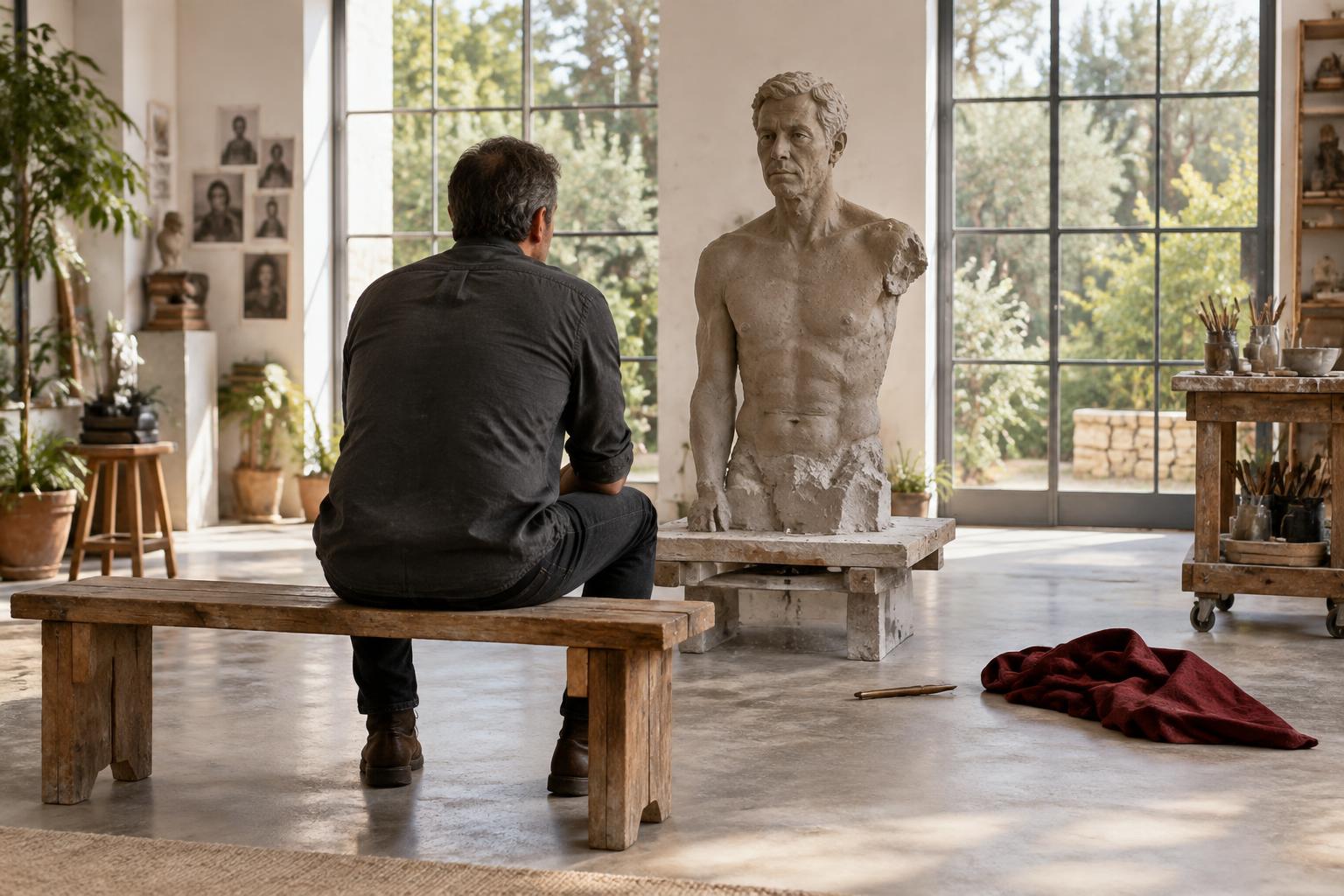
We are sharing this essay because personal growth is not always about chasing a bigger future. Sometimes it begins by acknowledging the future that did not happen. Its purpose is to make room for that disappointment, then help you choose what is still yours to build.
The life you expected
At twenty five, you may have had a fairly clear picture of the man you would become. A business that worked. A home that felt secure. A strong body. A relationship that lasted. The respect of people whose opinions mattered to you.
Then life happened. Some plans bent. Others broke. You worked hard and still lost things. You made mistakes, trusted the wrong people or discovered that effort does not guarantee the outcome you were promised.
The difficult part is not always the loss itself. It is the distance between the life you are living and the one you thought you should be living by now.
Weeks gives that feeling a name: grief. Not necessarily a clinical diagnosis, but a useful way of understanding the sadness attached to a version of yourself who never arrived.
Potential is not the same as proof
It is easy to remember your younger self as the better version. More energy. More time. More possibility. Fewer visible disappointments.
But that memory leaves something out. The younger man had not yet been tested by the life you have actually lived. He did not know how he would respond to failure, bereavement, responsibility or starting again.
The essay's central distinction is simple. Your younger self had potential. You have proof.
Proof that you have kept going through circumstances you would never have chosen. Proof that you can learn from decisions you once defended. Proof that certainty and wisdom are not the same thing.
That does not make every hardship worthwhile. You do not have to be grateful for being hurt. It means the experience belongs in your understanding of yourself, rather than being treated only as evidence that you fell short.
Respect the rough draft
Weeks describes the younger man as a rough draft. That is a kinder and more useful image than a failed masterpiece.
A rough draft contains ambition, energy and possibility. It also contains assumptions that have not met reality. You would not expect the first draft of a book to understand everything the finished work has learned.
You can respect what that younger man wanted without spending the rest of your life trying to recreate him. Some ambitions may still matter. Others may have been borrowed from family expectations, status or somebody else's definition of success.
Letting go is not pretending those dreams were foolish. It is admitting that the man making today's decisions has more information than the man who made the original plan.
Grief does not have to become your direction
The original essay contrasts the Victim's Path with the Conqueror's Path. One retreats into resignation and numbing. The other returns to learning, physical care and a code worth living by.
For The Signal, the useful challenge is the direction of travel, not a label for the person. Feeling wounded does not make you weak. Needing help does not make you a victim. Nor does one difficult week settle the question of who you are becoming.
The practical question is smaller: What could you do today that serves the life you still have?
That might mean taking a walk instead of withdrawing. Making the appointment you have avoided. Speaking honestly to someone you trust. Returning to a skill that once gave you purpose. One action will not resolve grief, but it can interrupt the belief that nothing is possible.
Keep your spirit aligned
The Continuum of Man brings Mind, Spirit and Body into the same conversation. Here, keeping your spirit aligned means recognising what you stand for when the old plan can no longer carry you.
Mind asks how you are interpreting what happened. Spirit asks what still matters and what kind of man you want your choices to reveal. Body asks whether your daily habits support you through the work of rebuilding.
The point is not to become impressive in all three areas overnight. It is to stop asking one part of your life to compensate for the neglect of another.
A written personal philosophy can help. Not a motivational slogan. A few honest sentences about what you value, what you will take responsibility for and how those commitments will show up in an ordinary week.
A small practice for the next chapter
As a starting point, try this reflection inspired by the essay. Write down the future you thought you would have. Name what you miss about it without editing yourself into sounding strong.
Then ask which part of that dream remains genuinely yours. Security? Contribution? Being present for your family? Feeling capable in your own body? Separate the value from the exact outcome you once attached to it.
Finally, choose one action you can complete this week that serves that value. Keep it specific and within your control. You are not rebuilding an entire life on a sheet of paper. You are giving the next chapter somewhere to begin.
You do not have to despise the man you thought you would be. You can thank him for his ambition, acknowledge what was lost and stop asking him to judge every day that follows.
The rough draft is not the only version worth living.
Editorial note: This essay offers reflection and coaching, not mental health treatment. If grief or hopelessness is persistent or affecting daily life, speak with a qualified professional or someone you trust. Zhi is an AI mentor, not a therapist.
Source: Grieving the Man You Thought You'd Be, Mark Weeks, URConqueror. Published 11 October 2026. The introduction, reflection exercise and editorial framing above were added by Team Azuni.