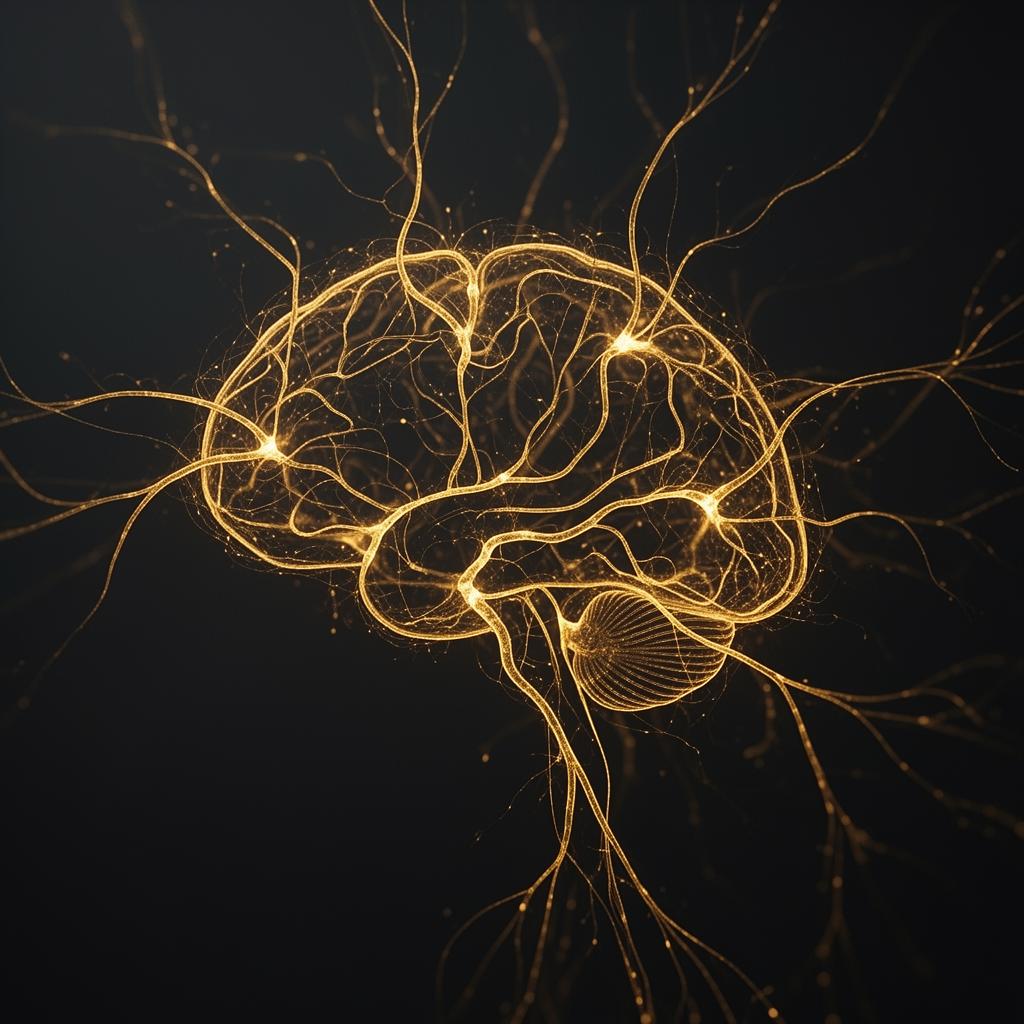
Created by Team Azuni | Source: Shad Helmstetter — The Power of Neuroplasticity
Every person who has ever tried to change. Truly change, not just update a habit or meet a goal. Has encountered the same invisible resistance.
The old voice. The one that sounds like wisdom but acts like a ceiling.
Shad Helmstetter spent decades investigating where that voice comes from, why it's so persistent, and most importantly, how to change it. His book The Power of Neuroplasticity is one of the clearest scientific cases ever made for why human transformation is not only possible, but neurologically inevitable when the right conditions are met.
Here is what every person committed to growth needs to understand.
You Were Programmed. And the Programme Can Be Rewritten
The brain you're running today was shaped by input you didn't choose. Childhood conditioning, absorbed beliefs, repeated experiences. All of it wired neural pathways that now run automatically, below conscious awareness.
Helmstetter describes this with uncomfortable precision:
"Because of the way your brain will unconsciously duplicate neural activity of the person you're with, anyone you spend your time with can imprint your brain with their programs. And neither of you will know it is."
Your environment has been programming you your entire life. The question isn't whether it happened, it's whether you're going to take the controls.
Helmstetter's answer, backed by neuroscience, is that you absolutely can:
"It makes no difference where you came from, if you know where you want to go."
That's not inspiration. That's biology. The brain is not fixed. It is, by its very nature, a change machine. Waiting for better input.
Self-Talk Is the Master Key
Across all the inputs that shape a human being, from education, environment, experience, and relationships, Helmstetter identifies one as the most powerful of all:
"Of all of the ways we get programmed, it is our self-talk that plays the single most important role in the programming of the brain. If you have the wrong self-talk, your life will be a struggle, and cannot work well. If you use the right self-talk, you will wire your brain in the best possible way. And the results will show in your life."
This is why the conversation about transformation always comes back to the internal voice. Not because it's the softest thing to address, but because it's the deepest lever. Change the self-talk, and you change the wiring. Change the wiring, and you change the life.
The Feedback Loop: Why Transformation Compounds
This is the part that changes how you think about practice:
"What you tell it, changes it. And while it's rewiring itself, your brain then feeds those new programs, those new pictures of yourself, back to you. What you put in, you get back out, in a continuous 'neural activity feedback loop.'"
Every intentional thought you choose is an investment that pays dividends. The brain rewires, then broadcasts its new wiring back to you as perception, instinct, and belief. Over time, the loop amplifies itself.
This is why transformation can feel agonisingly slow in the early stages, and why it suddenly feels effortless once the loop tips in your favour. You're not failing. You're building the infrastructure.
The 7 Conditions That Accelerate Change
Helmstetter maps out seven catalysts that make neurological rewiring faster and more durable:
Mindfulness · Choices · Intention · Focus · Repetition · Emotion · Belief
The insight here is that repetition alone is insufficient. Without mindfulness, without emotional engagement, without genuine belief. Repetition is just noise. The people who experience real transformation engage all seven. They don't just say new things to themselves; they mean them.
"Your conscious intention to do something increases your brain's ability to wire in new ideas!"
Intention is not passive wishing. It is an active neurological signal. When you decide, that is really decide, then the brain responds.
The Moment of Override
There is a specific moment where transformation either happens or doesn't. Helmstetter names it:
"Unless, of course, you stop, really think about it, consciously intervene, override your past programs, and choose the outcome of the vote for yourself."
That moment of conscious intervention. Catching the old pattern, pausing, and choosing differently. Is the entire practice. Not once. Not occasionally. Consistently, until the new response becomes the default.
This is what the Continuum of Man framework, created by Mark Weeks, points to. The Mind pillar isn't about positive thinking. It's about the deliberate, repeated act of authoring your own neural narrative.
The Story You Choose to Live
Helmstetter ends where every great transformation story ends. With a decision:
"It's not who you've been; it's who you decide to become. And that changes the story you're about to live."
The past is data, not destiny. The patterns that have held people back were written by forces they didn't choose, in circumstances they didn't control. But the next chapter? That's authored consciously. Or it isn't authored at all.
Science says you have the tool. The question is whether you'll pick it up.
That's the work the Azuni World ecosystem exists to support.
About This Source
Helmstetter, S. (2013). The Power of Neuroplasticity. Park Avenue Press.
Shad Helmstetter, PhD, is a bestselling author and one of the world's foremost authorities on self-talk, brain programming, and behavioural change. His research spans more than 40 years and over 20 published books. Learn more at shadhelmstetter.com.
Explore the full Azuni World ecosystem at www.azuni.world, as well as the Continuum of Man Framework. Start rewiring your self-talk today: [selftalklab.app](https://selftalklab.app)